#Lifestyle

Why Am I always Tired? 5 Science-Backed Ways to Boost Energy

Do you wake up feeling like you never slept? Or do you hit a “wall” every day at 2:00 PM? You aren’t alone. In 2025, doctors are seeing more people than ever complaining of constant fatigue.

While it’s easy to blame a busy schedule, science shows that our energy levels are controlled by specific biological “clocks” and chemical balances. Here are five proven ways to fix them.

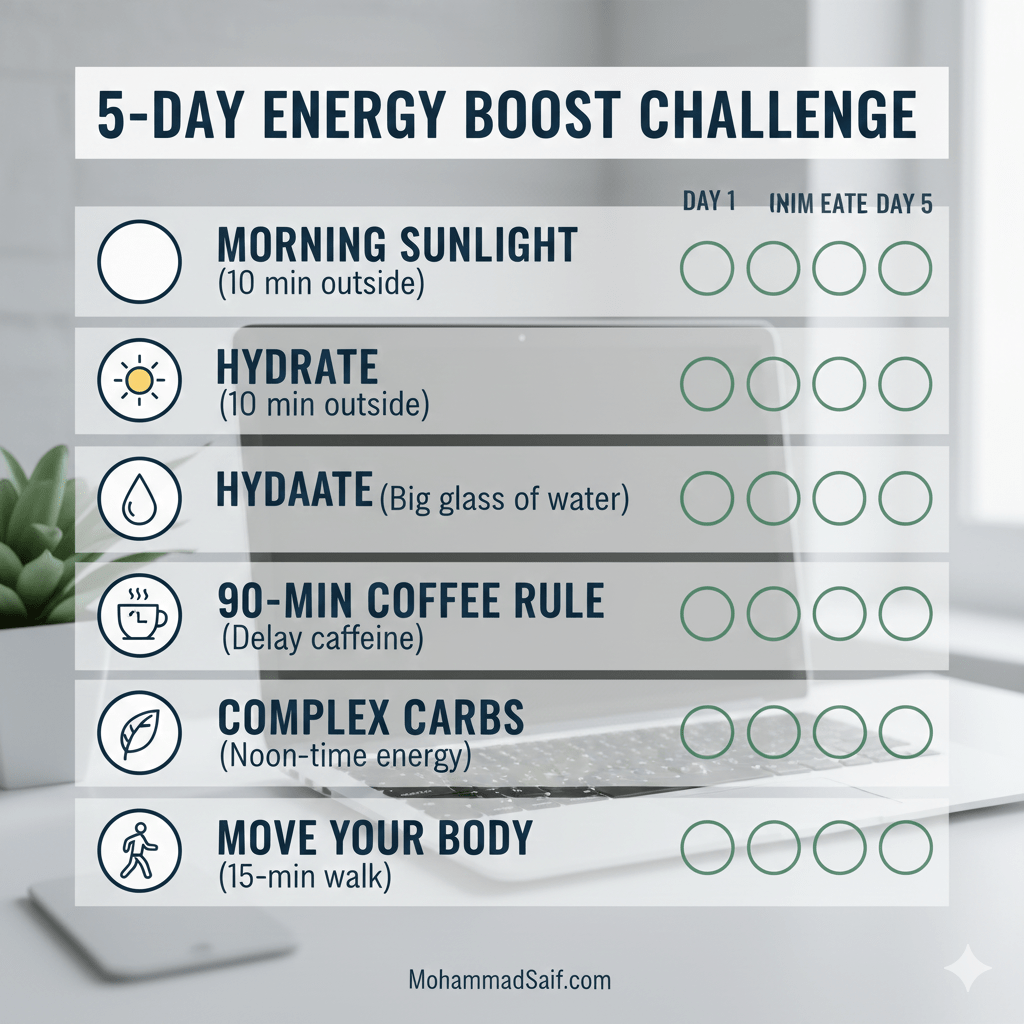
1. Fix Your “Internal Clock” with Morning Light

Your body has a natural rhythm called the circadian rhythm. It tells your brain when to be awake and when to be tired.

  • The Science: Viewing natural sunlight within 30 minutes of waking up triggers a release of cortisol (the “alertness” hormone) and sets a timer for melatonin (the “sleep” hormone) to release later that night.
  • The Fix: Step outside for 10 minutes every morning. Even a cloudy day provides more “lux” (light intensity) than your brightest indoor office lights.

2. Stop the “Glucose Rollercoaster”

That 2:00 PM crash is often caused by what you ate for lunch.

  • The Science: When you eat simple carbs (white bread, sugary snacks), your blood sugar spikes and then crashes. This “crash” makes your brain feel foggy and exhausted.
  • The Fix: Switch to complex carbohydrates like oats, quinoa, or nuts. These release energy slowly, keeping you steady all day.

3. Use the “90-Minute Rule” for Caffeine

Most people reach for coffee the second they wake up. Science says this is a mistake.

  • The Science: When you wake up, your brain is still clearing out adenosine (a chemical that makes you feel sleepy). If you drink caffeine immediately, it blocks the clearing process, leading to a massive “caffeine crash” by noon.
  • The Fix: Wait 90 minutes after waking up before having your first cup of coffee. This allows your body to naturally clear the sleepiness first.

4. Hydrate for Your Brain

Your brain is about 75% water. Even a tiny 1-2% drop in hydration can make you feel physically exhausted and mentally slow.

  • The Science: Dehydration causes your blood to thicken, making your heart work harder to pump oxygen to your brain and muscles.
  • The Fix: Don’t wait until you are thirsty. Drink a glass of water first thing in the morning to “restart” your system after 8 hours of fasting.

5. Movement Creates Energy

It sounds crazy: If I’m tired, why should I exercise?

  • The Science: Movement increases blood flow and tells your cells to create more mitochondria—the tiny “power plants” inside your body that produce energy.
  • The Fix: You don’t need a heavy gym session. A simple 15-minute brisk walk is scientifically proven to boost energy levels more effectively than a nap for most people.

When to See a Doctor

If you have tried these steps for two weeks and still feel exhausted, it might be a medical issue. Common “hidden” causes in 2025 include:

  • Iron Deficiency (Anemia): Very common, especially in women.
  • Vitamin D Deficiency: Many of us spend too much time indoors.
  • Sleep Apnea: If you snore or wake up gasping, your brain isn’t getting enough oxygen at night.

Final Thought: Energy isn’t something you “have”—it’s something you generate. By managing your light, food, and movement, you can take control of your battery life.

Tech

How Coffee Affects Your Body: The Science Behind Your Daily Brew

For many of us, the day doesn’t truly begin until that first sip of coffee hits our system. It’s a ritual, a comfort, and a survival tool all rolled into one. But beyond the immediate “wake-up” call, what is that cup of joe actually doing to your biology?

The impact of coffee is a complex mix of short-term stimulation and long-term health benefits. Let’s break down how your favorite morning beverage travels through your body.


1. The Brain: The Adenosine Hijack

The most famous effect of coffee happens in your brain. Coffee contains caffeine, which is structurally similar to a molecule called adenosine.

  • The Process: Throughout the day, adenosine builds up in your brain, binding to receptors that tell your body it’s time to feel tired.
  • The Switch: Caffeine enters the brain and “plugs” those receptors, preventing adenosine from doing its job.
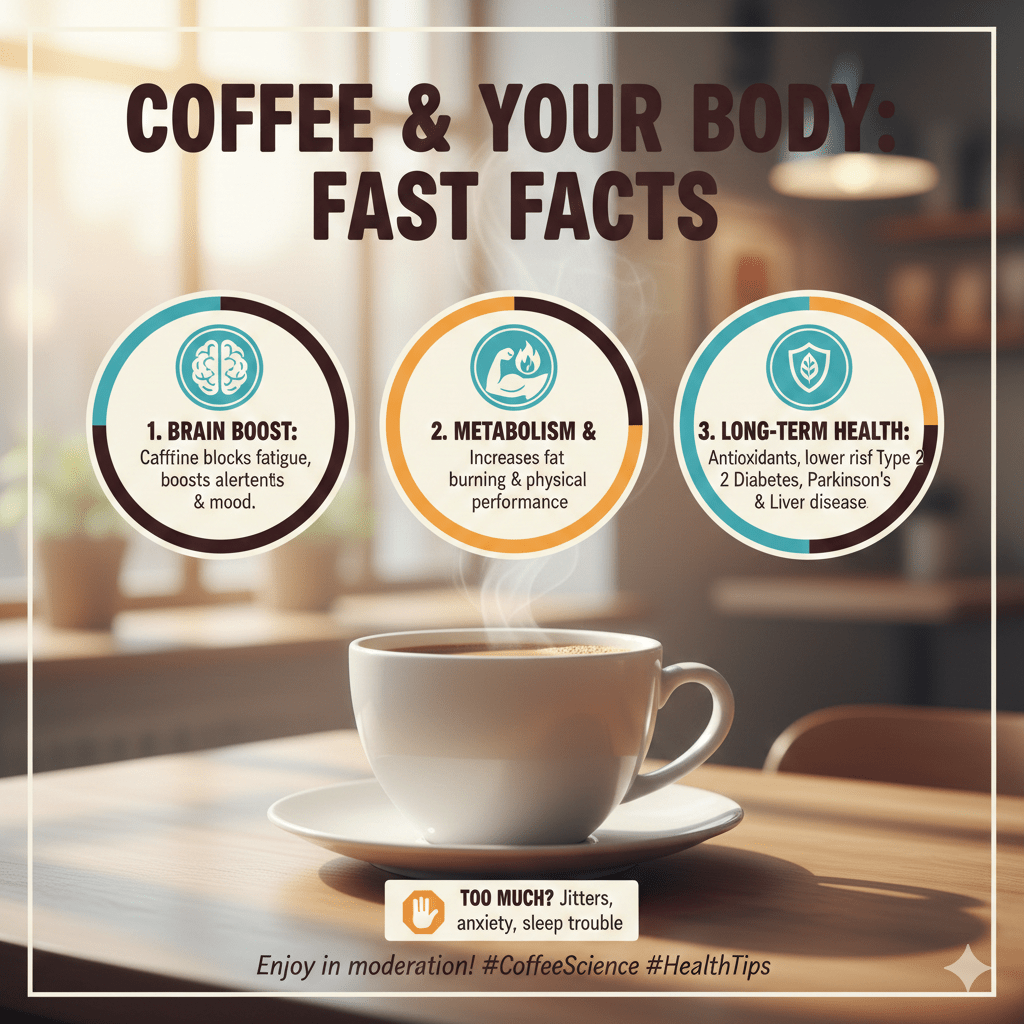
  • The Result: Instead of feeling drowsy, you experience a surge of alertness and dopamine, which improves mood and cognitive function.

2. The Heart and Metabolism

Within 15 to 45 minutes of drinking coffee, your metabolism gets a temporary kickstart.

  • Adrenaline Spike: Caffeine signals your adrenal glands to release adrenaline (epinephrine). This can slightly increase your heart rate and open up airways.
  • Fat Burning: Studies show that caffeine can increase your metabolic rate by 3% to 11%, helping the body mobilize fats from fat tissues.
  • Physical Performance: By increasing adrenaline levels, coffee prepares your body for intense physical exertion, which is why it’s a popular “pre-workout” drink.

3. Digestion and the Gut

Have you ever noticed that coffee sends you straight to the bathroom? You aren’t imagining it. Coffee stimulates the release of gastrin, a hormone that speeds up activity in the colon. It also triggers the release of digestive enzymes in the stomach, which can help (or sometimes hinder) digestion depending on your sensitivity.

4. Long-Term Health Benefits

When consumed in moderation (typically 3–4 cups a day), coffee has been linked to several impressive long-term protective effects:

Benefit TypePotential Impact
Brain HealthMay lower the risk of Alzheimer’s and Parkinson’s disease.
Liver ProtectionLinked to a significantly lower risk of liver cirrhosis and liver cancer.
Type 2 DiabetesRegular drinkers often show a reduced risk of developing insulin resistance.
AntioxidantsFor many people in Western diets, coffee is a primary source of inflammation-fighting antioxidants.

The “Fine Print”: When to Be Careful

While coffee is generally a health win, it isn’t for everyone. Excessive intake can lead to:

  • Anxiety and Jitters: Too much caffeine can overstimulate the “fight or flight” response.
  • Sleep Disruption: Caffeine has a half-life of about 5–6 hours. That 4:00 PM espresso might still be in your system at midnight.
  • Acid Reflux: Coffee is acidic and can relax the lower esophageal sphincter, leading to heartburn.

Final Thoughts

Coffee is more than just a caffeine delivery system; it’s a biologically active beverage that influences everything from your DNA repair to your digestive speed. If you enjoy your coffee black or with a splash of milk, you’re likely doing your body a favor. Just keep an eye on the added sugars and your “cutoff time” for caffeine to ensure you get the benefits without the burnout.