For many of us, the day doesn’t truly begin until that first sip of coffee hits our system. It’s a ritual, a comfort, and a survival tool all rolled into one. But beyond the immediate “wake-up” call, what is that cup of joe actually doing to your biology?
The impact of coffee is a complex mix of short-term stimulation and long-term health benefits. Let’s break down how your favorite morning beverage travels through your body.
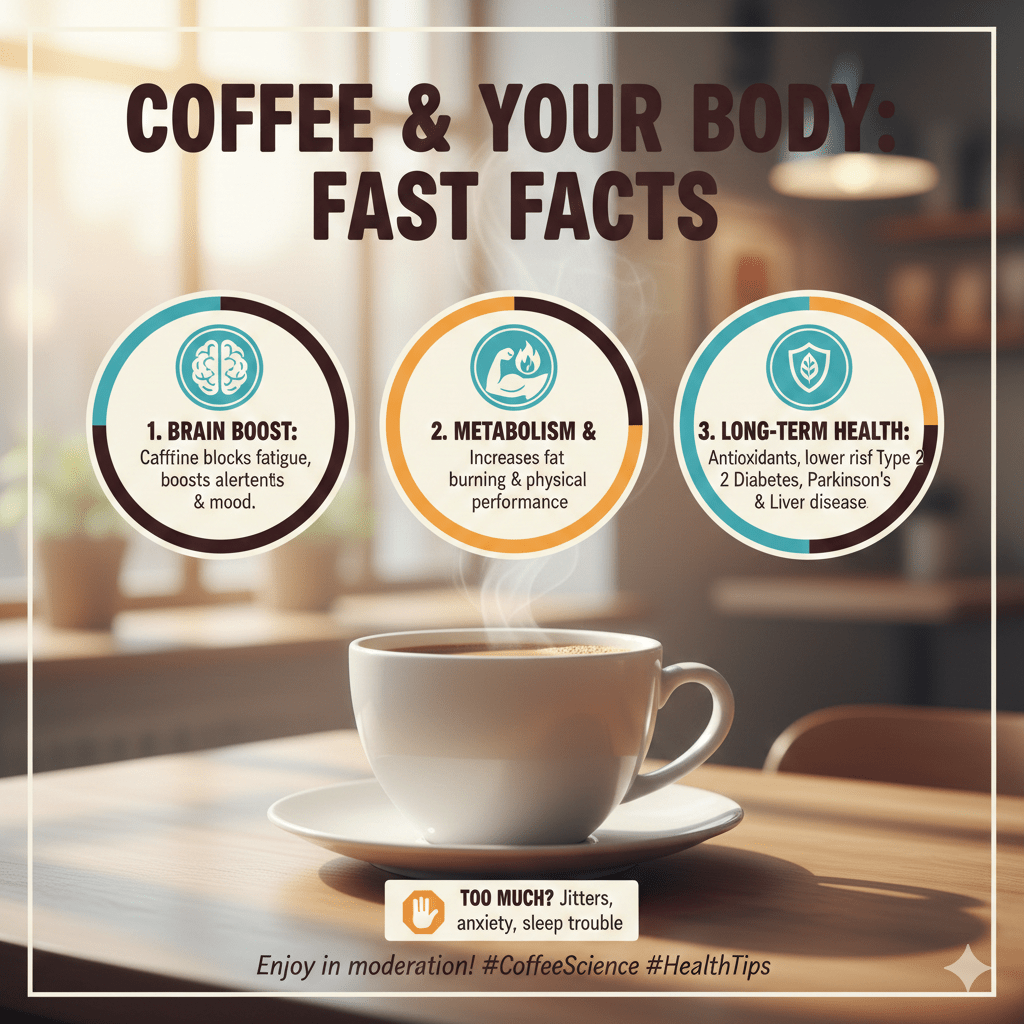
1. The Brain: The Adenosine Hijack
The most famous effect of coffee happens in your brain. Coffee contains caffeine, which is structurally similar to a molecule called adenosine.
- The Process: Throughout the day, adenosine builds up in your brain, binding to receptors that tell your body it’s time to feel tired.
- The Switch: Caffeine enters the brain and “plugs” those receptors, preventing adenosine from doing its job.
- The Result: Instead of feeling drowsy, you experience a surge of alertness and dopamine, which improves mood and cognitive function.
2. The Heart and Metabolism
Within 15 to 45 minutes of drinking coffee, your metabolism gets a temporary kickstart.
- Adrenaline Spike: Caffeine signals your adrenal glands to release adrenaline (epinephrine). This can slightly increase your heart rate and open up airways.
- Fat Burning: Studies show that caffeine can increase your metabolic rate by 3% to 11%, helping the body mobilize fats from fat tissues.
- Physical Performance: By increasing adrenaline levels, coffee prepares your body for intense physical exertion, which is why it’s a popular “pre-workout” drink.
3. Digestion and the Gut
Have you ever noticed that coffee sends you straight to the bathroom? You aren’t imagining it. Coffee stimulates the release of gastrin, a hormone that speeds up activity in the colon. It also triggers the release of digestive enzymes in the stomach, which can help (or sometimes hinder) digestion depending on your sensitivity.
4. Long-Term Health Benefits
When consumed in moderation (typically 3–4 cups a day), coffee has been linked to several impressive long-term protective effects:
| Benefit Type | Potential Impact |
| Brain Health | May lower the risk of Alzheimer’s and Parkinson’s disease. |
| Liver Protection | Linked to a significantly lower risk of liver cirrhosis and liver cancer. |
| Type 2 Diabetes | Regular drinkers often show a reduced risk of developing insulin resistance. |
| Antioxidants | For many people in Western diets, coffee is a primary source of inflammation-fighting antioxidants. |
The “Fine Print”: When to Be Careful
While coffee is generally a health win, it isn’t for everyone. Excessive intake can lead to:
- Anxiety and Jitters: Too much caffeine can overstimulate the “fight or flight” response.
- Sleep Disruption: Caffeine has a half-life of about 5–6 hours. That 4:00 PM espresso might still be in your system at midnight.
- Acid Reflux: Coffee is acidic and can relax the lower esophageal sphincter, leading to heartburn.
Final Thoughts
Coffee is more than just a caffeine delivery system; it’s a biologically active beverage that influences everything from your DNA repair to your digestive speed. If you enjoy your coffee black or with a splash of milk, you’re likely doing your body a favor. Just keep an eye on the added sugars and your “cutoff time” for caffeine to ensure you get the benefits without the burnout.

