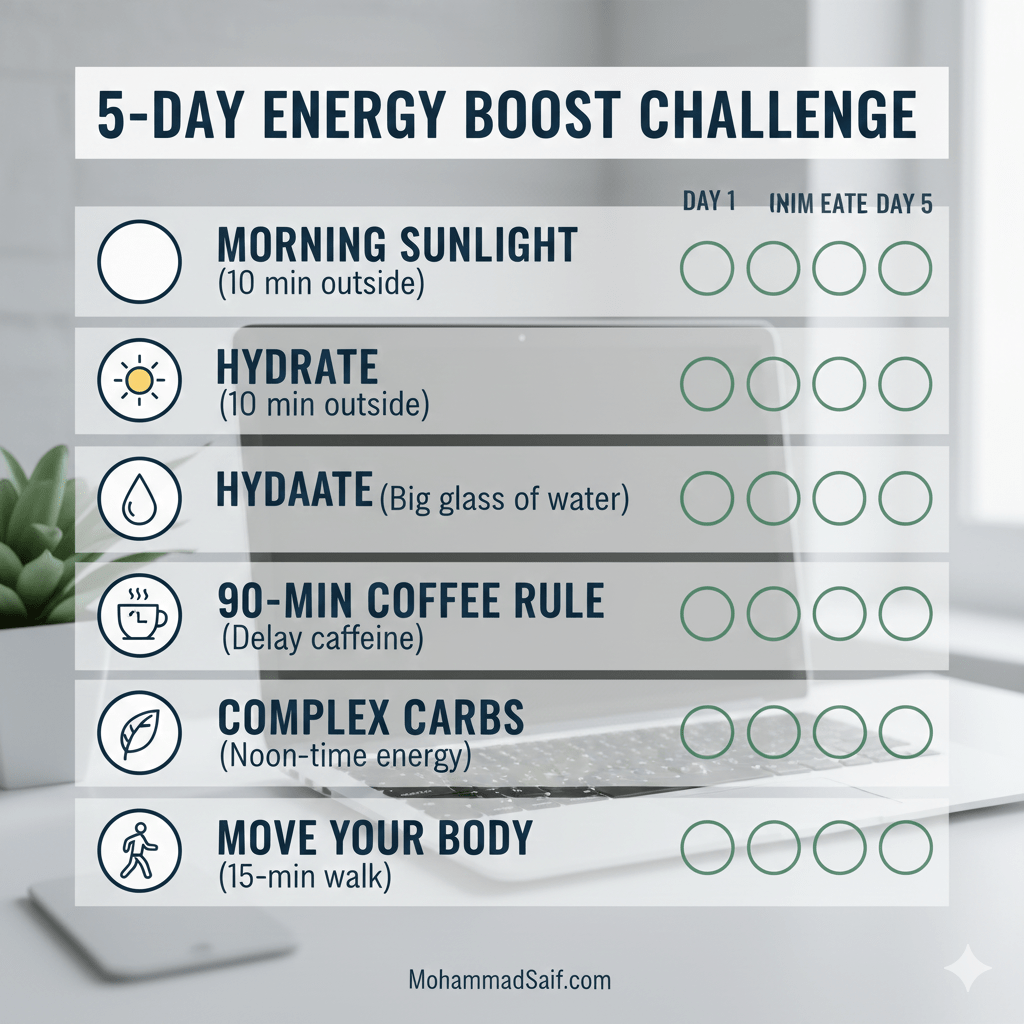
Do you wake up feeling like you never slept? Or do you hit a “wall” every day at 2:00 PM? You aren’t alone. In 2025, doctors are seeing more people than ever complaining of constant fatigue.
While it’s easy to blame a busy schedule, science shows that our energy levels are controlled by specific biological “clocks” and chemical balances. Here are five proven ways to fix them.
1. Fix Your “Internal Clock” with Morning Light
Your body has a natural rhythm called the circadian rhythm. It tells your brain when to be awake and when to be tired.
- The Science: Viewing natural sunlight within 30 minutes of waking up triggers a release of cortisol (the “alertness” hormone) and sets a timer for melatonin (the “sleep” hormone) to release later that night.
- The Fix: Step outside for 10 minutes every morning. Even a cloudy day provides more “lux” (light intensity) than your brightest indoor office lights.
2. Stop the “Glucose Rollercoaster”
That 2:00 PM crash is often caused by what you ate for lunch.
- The Science: When you eat simple carbs (white bread, sugary snacks), your blood sugar spikes and then crashes. This “crash” makes your brain feel foggy and exhausted.
- The Fix: Switch to complex carbohydrates like oats, quinoa, or nuts. These release energy slowly, keeping you steady all day.
3. Use the “90-Minute Rule” for Caffeine
Most people reach for coffee the second they wake up. Science says this is a mistake.
- The Science: When you wake up, your brain is still clearing out adenosine (a chemical that makes you feel sleepy). If you drink caffeine immediately, it blocks the clearing process, leading to a massive “caffeine crash” by noon.
- The Fix: Wait 90 minutes after waking up before having your first cup of coffee. This allows your body to naturally clear the sleepiness first.
4. Hydrate for Your Brain
Your brain is about 75% water. Even a tiny 1-2% drop in hydration can make you feel physically exhausted and mentally slow.
- The Science: Dehydration causes your blood to thicken, making your heart work harder to pump oxygen to your brain and muscles.
- The Fix: Don’t wait until you are thirsty. Drink a glass of water first thing in the morning to “restart” your system after 8 hours of fasting.
5. Movement Creates Energy
It sounds crazy: If I’m tired, why should I exercise?
- The Science: Movement increases blood flow and tells your cells to create more mitochondria—the tiny “power plants” inside your body that produce energy.
- The Fix: You don’t need a heavy gym session. A simple 15-minute brisk walk is scientifically proven to boost energy levels more effectively than a nap for most people.
When to See a Doctor
If you have tried these steps for two weeks and still feel exhausted, it might be a medical issue. Common “hidden” causes in 2025 include:
- Iron Deficiency (Anemia): Very common, especially in women.
- Vitamin D Deficiency: Many of us spend too much time indoors.
- Sleep Apnea: If you snore or wake up gasping, your brain isn’t getting enough oxygen at night.
Final Thought: Energy isn’t something you “have”—it’s something you generate. By managing your light, food, and movement, you can take control of your battery life.

