#Lifestyle

Why Am I always Tired? 5 Science-Backed Ways to Boost Energy

Do you wake up feeling like you never slept? Or do you hit a “wall” every day at 2:00 PM? You aren’t alone. In 2025, doctors are seeing more people than ever complaining of constant fatigue.

While it’s easy to blame a busy schedule, science shows that our energy levels are controlled by specific biological “clocks” and chemical balances. Here are five proven ways to fix them.

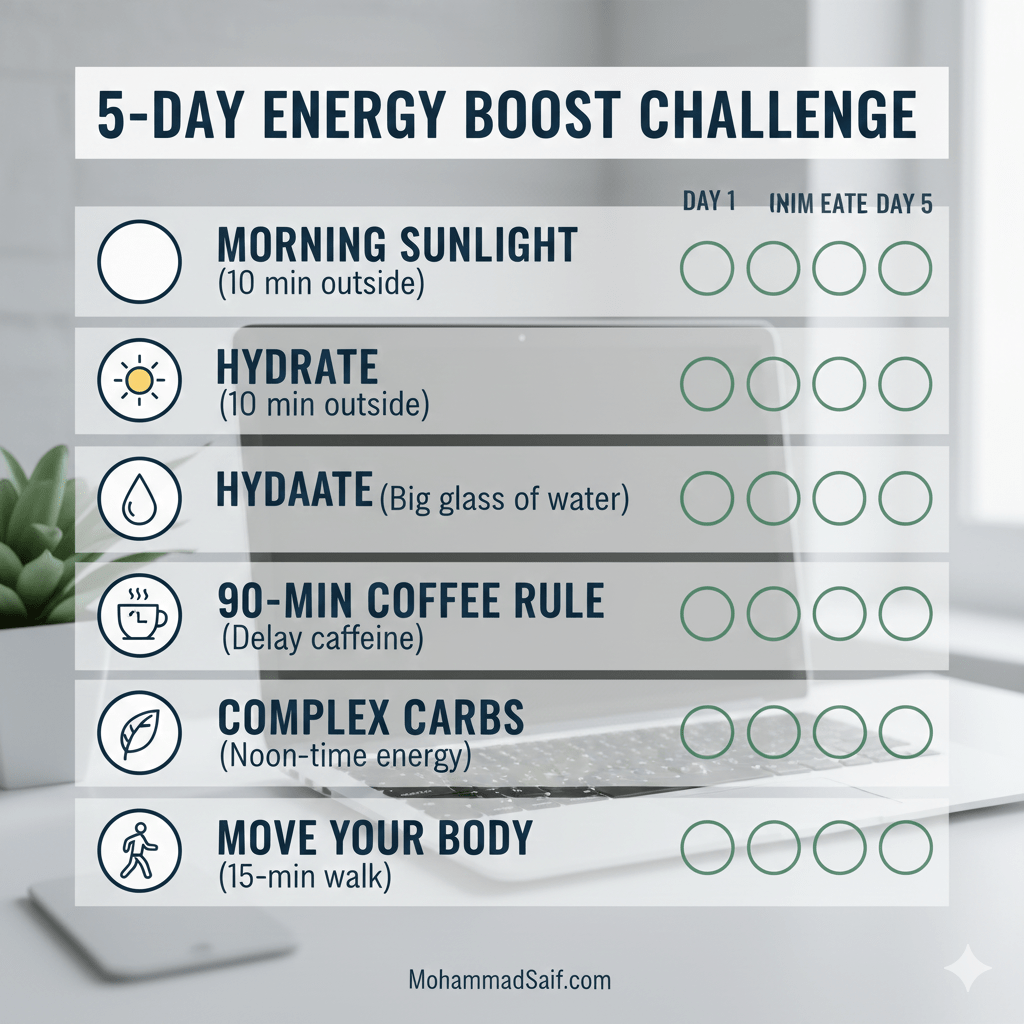
1. Fix Your “Internal Clock” with Morning Light

Your body has a natural rhythm called the circadian rhythm. It tells your brain when to be awake and when to be tired.

  • The Science: Viewing natural sunlight within 30 minutes of waking up triggers a release of cortisol (the “alertness” hormone) and sets a timer for melatonin (the “sleep” hormone) to release later that night.
  • The Fix: Step outside for 10 minutes every morning. Even a cloudy day provides more “lux” (light intensity) than your brightest indoor office lights.

2. Stop the “Glucose Rollercoaster”

That 2:00 PM crash is often caused by what you ate for lunch.

  • The Science: When you eat simple carbs (white bread, sugary snacks), your blood sugar spikes and then crashes. This “crash” makes your brain feel foggy and exhausted.
  • The Fix: Switch to complex carbohydrates like oats, quinoa, or nuts. These release energy slowly, keeping you steady all day.

3. Use the “90-Minute Rule” for Caffeine

Most people reach for coffee the second they wake up. Science says this is a mistake.

  • The Science: When you wake up, your brain is still clearing out adenosine (a chemical that makes you feel sleepy). If you drink caffeine immediately, it blocks the clearing process, leading to a massive “caffeine crash” by noon.
  • The Fix: Wait 90 minutes after waking up before having your first cup of coffee. This allows your body to naturally clear the sleepiness first.

4. Hydrate for Your Brain

Your brain is about 75% water. Even a tiny 1-2% drop in hydration can make you feel physically exhausted and mentally slow.

  • The Science: Dehydration causes your blood to thicken, making your heart work harder to pump oxygen to your brain and muscles.
  • The Fix: Don’t wait until you are thirsty. Drink a glass of water first thing in the morning to “restart” your system after 8 hours of fasting.

5. Movement Creates Energy

It sounds crazy: If I’m tired, why should I exercise?

  • The Science: Movement increases blood flow and tells your cells to create more mitochondria—the tiny “power plants” inside your body that produce energy.
  • The Fix: You don’t need a heavy gym session. A simple 15-minute brisk walk is scientifically proven to boost energy levels more effectively than a nap for most people.

When to See a Doctor

If you have tried these steps for two weeks and still feel exhausted, it might be a medical issue. Common “hidden” causes in 2025 include:

  • Iron Deficiency (Anemia): Very common, especially in women.
  • Vitamin D Deficiency: Many of us spend too much time indoors.
  • Sleep Apnea: If you snore or wake up gasping, your brain isn’t getting enough oxygen at night.

Final Thought: Energy isn’t something you “have”—it’s something you generate. By managing your light, food, and movement, you can take control of your battery life.

#Lifestyle

Weekly Cost of Healthy Eating (Estimates)

The cost varies depending on your “budgeting style.” All costs assume 100% of meals are prepared at home.

Plan TypeIndividual (Adult 20–50)Family of 4 (Ref. Family)
Thrifty Plan (Budget-conscious)$57 – $72$231
Low-Cost Plan$62 – $72$253
Moderate Plan$76 – $90$312
Liberal Plan$96 – $109$376


Key Factors Driving 2025 Prices

  • Inflation Trends: Overall food-at-home prices rose approximately 2.4% to 2.7% over the last year.1
  • Location Premiums: If you live in Hawaii or Alaska, expect these costs to be 30–50% higher. States like New York and California also trend about 10–15% above the national average.
  • The “Health Premium”: On average, a diet high in fresh produce and lean proteins costs about $1.50 more per day ($10.50 per week) than a diet heavy in highly processed convenience foods.

3 Ways to Lower the Cost of a Healthy Diet

  1. The “30-Plant” Strategy: Buying a variety of beans, lentils, and grains in bulk is often cheaper per serving than pre-packaged “health snacks.”
  2. Frozen over Fresh: In 2025, “flash-frozen” vegetables are considered nutritionally equivalent to fresh ones and often cost 30% less.
  3. Store-Brand Organics: Private labels (like Whole Foods’ 365 or Kroger’s Simple Truth) have closed the price gap with conventional brands, making organic-lifestyle habits more accessible.

Here is a targeted grocery list and the best-value protein sources to help you hit that goal.


The $60 “Thrifty” Weekly Grocery List

This list focuses on nutrient density—prioritizing fiber, healthy fats, and high protein while staying under budget.

CategoryItem (Estimated Price)Use Case
ProteinsEggs (1 doz) & Canned Tuna (2) – $7.00Breakfasts, salads, or quick snacks.
Dry Lentils or Black Beans (1lb) – $2.00The “anchor” for 3–4 dinners.
Chicken Thighs (Family pack) – $10.00Versatile, cheaper than breasts.
GrainsLarge Oats (42oz) – $4.5010+ servings of breakfast.
Brown Rice or Whole Wheat Pasta – $3.50Filling base for all main meals.
ProduceBananas & Apples – $5.00Daily fruit intake.
Large Bag Spinach or Kale – $3.50Greens for smoothies or sautéing.
Carrots & Onions (Bulk) – $4.00Flavor base for soups and roasts.
Frozen Mixed Veggies (2 bags) – $5.00Zero-waste fiber for dinners.
Pantry/DairyGreek Yogurt (Large tub) – $5.50High-protein snack or sour cream sub.
Peanut Butter (Jar) – $3.00Healthy fats and extra protein.
Total Estimated Weekly Spend~$53.00 (leaving $7 for tax/spices)

Best Value High-Protein Foods (2025–2026 Trends)

If your goal is to maximize protein per dollar, these are your “Big 5” winners for the coming year:

  1. Dry Legumes (Lentils/Chickpeas): Still the undisputed king of value. You get roughly 18g of protein per cup for pennies.
  2. Eggs: Despite price fluctuations in 2024, eggs remain the most bioavailable, low-cost “complete” protein in 2025.
  3. Canned Sardines/Mackerel: High in Omega-3s and protein. They are more shelf-stable and often cheaper than fresh fish.
  4. Store-Brand Greek Yogurt: In 2025, retailers have improved their “Private Label” formulas, offering high protein counts (approx. 15–18g per serving) at 40% less than name brands.
  5. Cottage Cheese: Currently trending for its “whippable” texture, it provides nearly 25g of protein per cup and is often on sale as a dairy staple.

Pro-Tip for 2026: The “Frozen First” Rule

By 2026, supply chain optimizations for frozen produce are expected to make frozen “Super-Greens” (like frozen edamame and chopped kale) up to 50% cheaper than fresh, with the same nutritional profile.

Let’s turn that $60 grocery list into a streamlined 7-Day Meal Prep Plan.

This plan uses the “Cook Once, Eat Twice” philosophy to save you time during the week while ensuring you hit your protein and fiber goals.


The 7-Day “Thrifty & Healthy” Plan

MealMon – WedThu – FriSat – Sun (Fresh Days)
BreakfastOvernight Oats: Oats, Greek yogurt, peanut butter, and a few frozen berries.Warm Savory Oats: Oats cooked with an egg swirled in and sautéed spinach.Greek Yogurt Bowl with fresh apples and a drizzle of peanut butter.
LunchTuna Salad Wraps/Bowls: Canned tuna mixed with Greek yogurt (sub for mayo), carrots, and onions over rice.Lentil Power Bowls: Large batch of lentils, brown rice, and frozen mixed veggies.Egg & Greens Scramble: 3 eggs, sautéed onions, and a large handful of spinach.
DinnerSheet Pan Chicken: Roasted chicken thighs with carrots, onions, and broccoli.Black Bean Stir-Fry: Sautéed black beans, onions, and frozen veggies over rice.“Kitchen Sink” Soup: Use the remaining chicken, lentils, and all leftover veggies.
SnackApple slices with peanut butter.A hard-boiled egg.Greek yogurt with a banana.

3 Tips to Make This Work

  1. Batch Cook on Sunday: Cook your entire bag of brown rice and your bag of lentils all at once. Keep them in the fridge to use as a “base” for every lunch and dinner.
  2. The Yogurt Swap: Notice we aren’t buying mayo or sour cream. Plain Greek yogurt is your “Swiss Army Knife”—it works as a high-protein substitute in tuna salad, on top of black beans, or as a breakfast base.
  3. Seasoning is Key: Since this is a “Thrifty” plan, use the $7 leftover in the budget for a versatile spice like Smoked Paprika or Garlic Powder to keep the meals from feeling repetitive.
#Lifestyle

Christmas Across Europe: A Magical Tour Through the Continent’s Festive Capitals

As December descends, Europe transforms into a winter wonderland, each city glowing with its unique festive charm. While the spirit of Christmas unites the continent, the traditions, markets, and culinary delights vary dramatically from one capital to another.

Join us on a virtual tour of Christmas celebrations across some of Europe’s most iconic cities!


1. London, United Kingdom: A Quintessential British Christmas

London during Christmas is a spectacle of lights and traditional cheer.

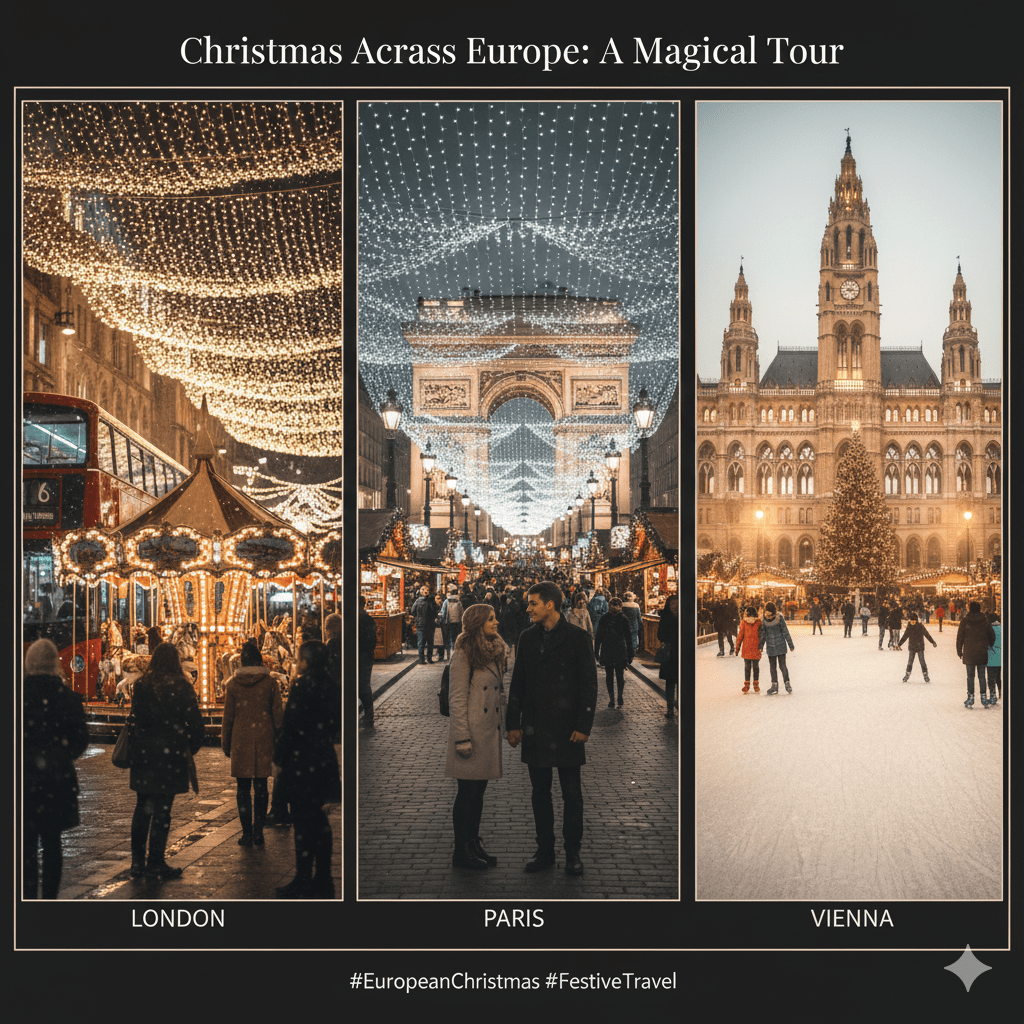
  • Oxford Street & Regent Street Lights: The dazzling light displays on these iconic shopping streets are world-famous, often accompanied by elaborate window displays from department stores like Harrods and Selfridges.
  • Hyde Park Winter Wonderland: This massive annual event features ice skating, thrilling rides, festive markets, and live entertainment, making it a must-visit for families.
  • Carol Singing: The tradition of carol singing is strong, with performances in Trafalgar Square around the giant Christmas tree (a gift from Norway) and in Westminster Abbey.
  • Pantomimes: A unique British tradition, these comedic musical plays are a beloved holiday pastime for all ages.

2. Paris, France: Noël à la Ville Lumière

Paris, the City of Lights, becomes even more enchanting during the festive season.

  • Champs-Élysées Lights: The grand avenue is illuminated with spectacular displays, leading up to the Arc de Triomphe, creating an unforgettable evening stroll.
  • Marchés de Noël: Traditional Christmas markets pop up across the city, most notably in La Défense, offering artisanal crafts, gourmet treats like vin chaud (mulled wine) and châtaignes grillées (roasted chestnuts).
  • Galeries Lafayette Dome: The iconic department store’s stunning Art Nouveau dome houses an elaborate, often whimsical, Christmas tree that draws crowds.
  • Ice Skating: Temporary ice rinks emerge in picturesque locations, like the one often found outside the Hôtel de Ville.

3. Berlin, Germany: A Historic & Heartfelt Weihnachten

Germany is the birthplace of many Christmas traditions, and Berlin embraces them with gusto.

  • Numerous Christmas Markets: Berlin boasts over 100 Christmas markets, each with its own character. The market at Gendarmenmarkt is particularly beautiful, known for its crafts and gourmet food, while Charlottenburg Palace offers a majestic backdrop.
  • Glühwein & Bratwurst: These staples are found at every market, providing warmth and flavor against the winter chill.
  • Festive Events: From classical concerts to special holiday services in the Berlin Cathedral, the city offers a rich cultural experience.
  • Brandenburg Gate: While not decorated in the traditional sense, the Gate often serves as a focal point for festive gatherings and New Year’s Eve celebrations.

4. Vienna, Austria: An Imperial Christmas Fairytale

Vienna’s imperial architecture provides a breathtaking setting for its Christmas celebrations.

  • Christkindlmarkt at Rathausplatz: The most famous market, set in front of Vienna’s City Hall, is a fairytale of twinkling lights, traditional crafts, and delicious treats like Lebkuchen (gingerbread).
  • Schönbrunn Palace Market: The baroque splendor of Schönbrunn Palace hosts a charming cultural market, perfect for unique gifts.
  • Classical Concerts: Vienna, the city of music, offers an abundance of classical Christmas concerts in historic venues.
  • Ice Dream: After Christmas, the area around Rathausplatz transforms into a huge ice-skating rink, Wiener Eistraum, adding another layer of winter magic.

5. Rome, Italy: Natale in the Eternal City

Christmas in Rome combines ancient history with heartfelt religious traditions.

  • St. Peter’s Square: The Vatican is the spiritual heart of Catholic Christmas, featuring a massive Christmas tree and a life-sized Nativity scene (presepe). Midnight Mass in St. Peter’s Basilica is a profound experience.
  • Piazza Navona Market: Traditionally, this piazza hosts a lively Christmas market with toys, sweets, and carousel rides.
  • Via del Corso Lights: Rome’s main shopping street is adorned with elegant lights, creating a festive atmosphere for shoppers.
  • Presepi Everywhere: Nativity scenes are central to Italian Christmas, displayed in churches, homes, and public spaces throughout the city.

**Which European city’s Christmas celebration sounds most appealing to you?**